
Sanitary Drainage Flow Restored at South Yarra Property
Completed Job Summary
Blocked sanitary drainage affecting multiple fixtures was addressed during a residential plumbing service in South Yarra. Fixtures were cleared, drainage conditions assessed via CCTV inspection, and pipework adjustments performed to improve flow conditions.
16 February 2026
 Taylor
Senior Plumber
81267
This job record is derived from first-party technician notes and the Simpro job management
Customer report
The customer reported issues with an overflowing toilet and requested a pressure check. Multiple fixtures, including the toilet, basin, and shower, were affected by drainage problems. Images provided during the quoting stage supported the reported conditions and indicated a broader issue within the sanitary drainage system impacting normal wastewater flow.
Diagnosis & Technical Assessment
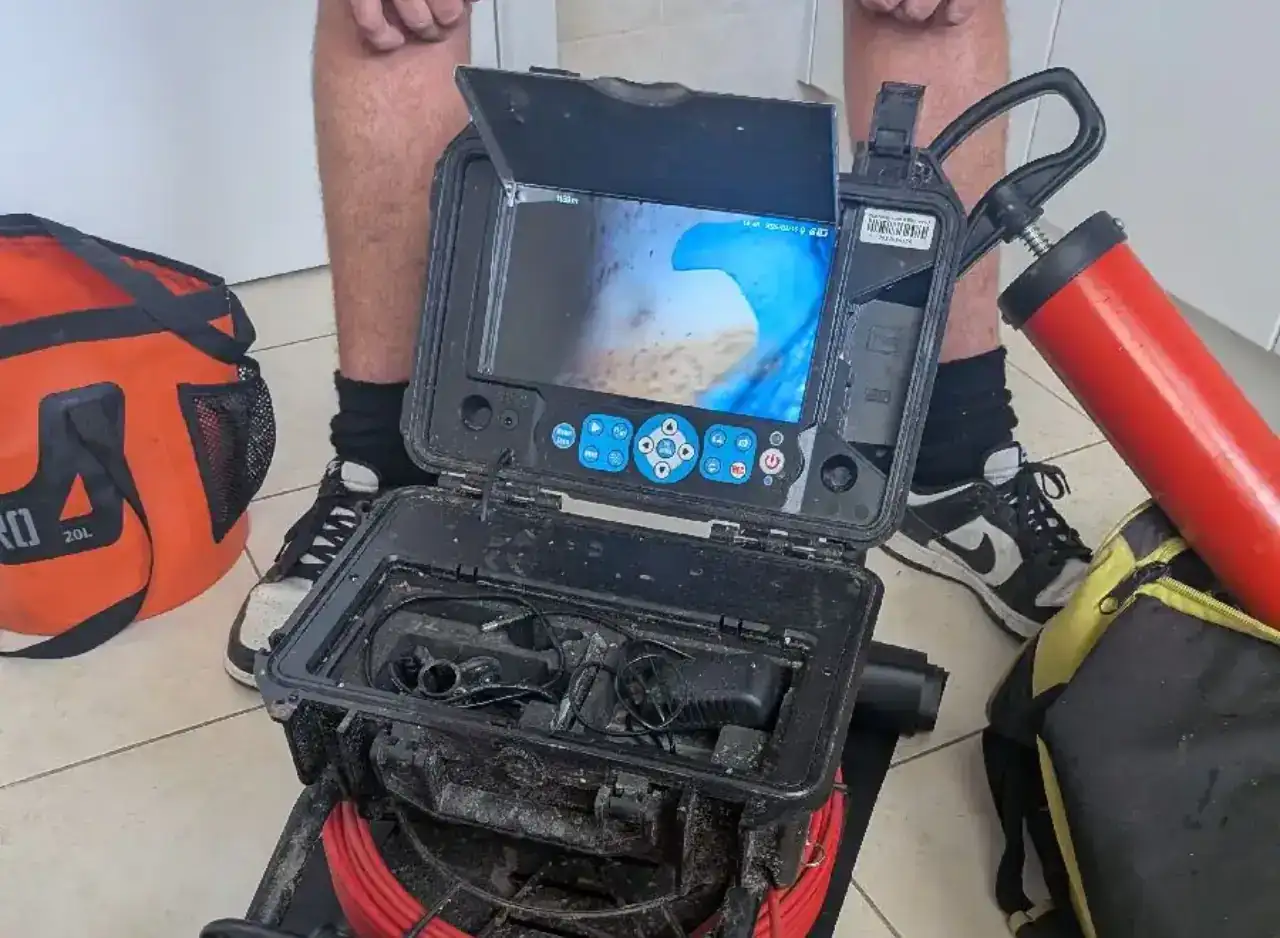
A CCTV drain investigation was conducted to assess the condition of the sanitary drainage system and identify the cause of the blockage. Inspection of the main branch line leading to the stack dropper revealed insufficient pipe fall, limiting the effective flow of wastewater through the system.
Further observations identified a section of pipework with backflow, resulting in approximately 20mm of standing water within the line. This standing water created a low point where solids and paper could accumulate, leading to repeated blockages across connected fixtures.
The accumulation point within the pipework was consistent with the reported overflow and reduced drainage performance in the toilet, basin, and shower. The system behaviour indicated that while surface blockages could be cleared, the underlying gradient issue within the branch line continued to influence flow efficiency and material movement through the drainage system.
All work was completed in accordance with the Victorian Building Authority (VBA) regulatory framework.
Solutions delivered
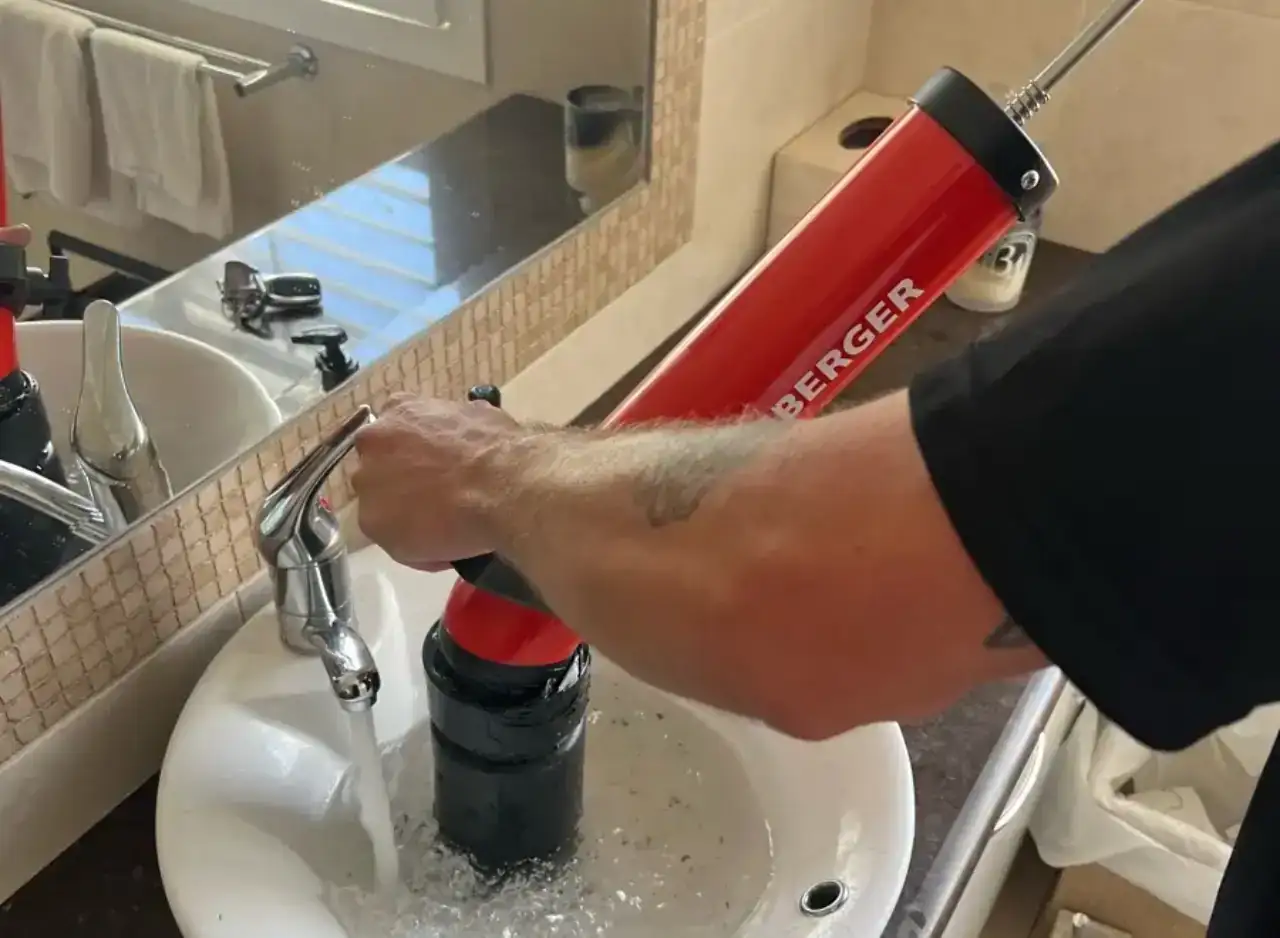
Initial work focused on restoring flow through the affected fixtures. The toilet line, basin branch line, and shower branch line were cleared using manual plunging methods to remove accumulated waste and restore immediate functionality.
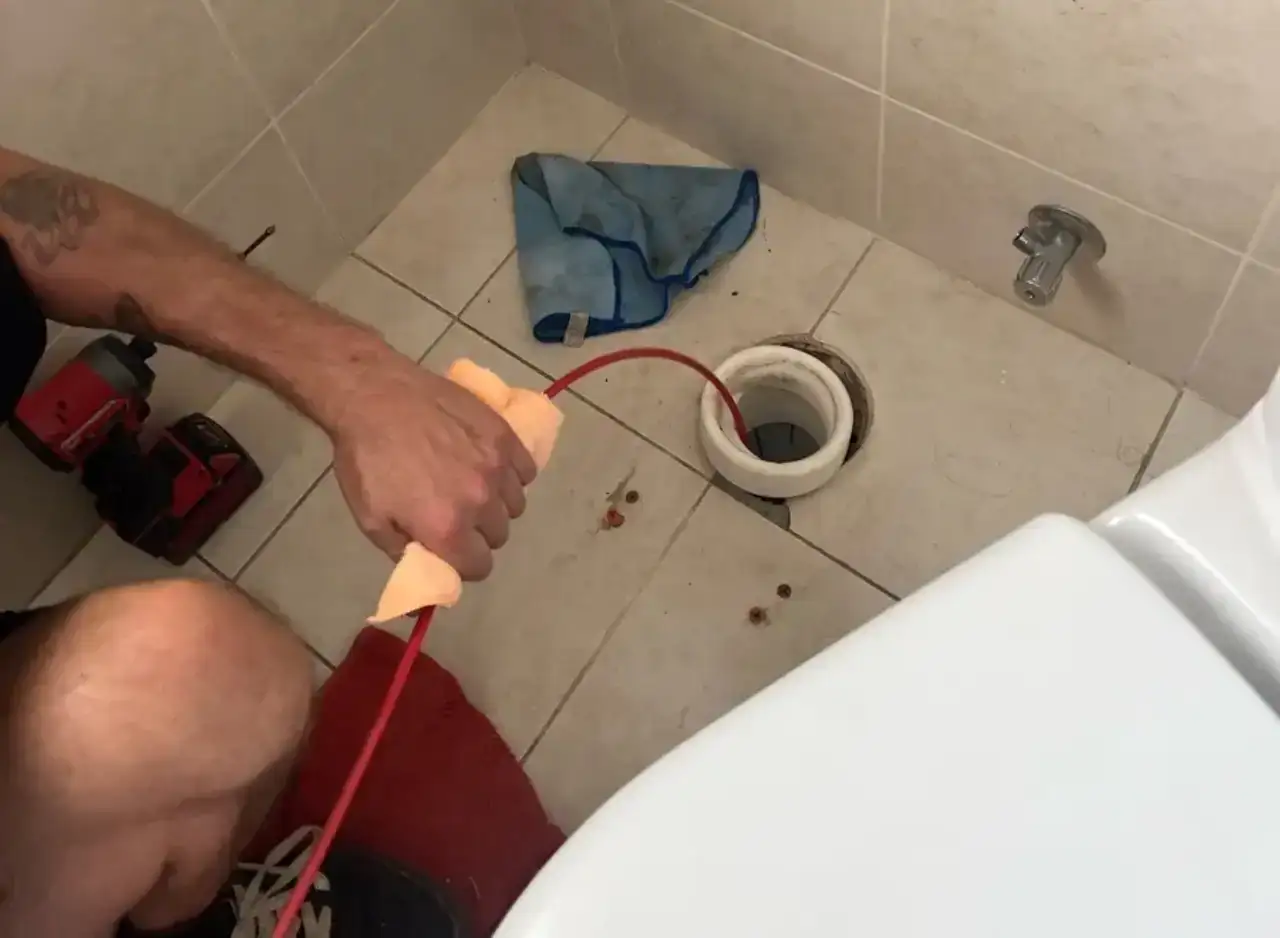
Following clearance, a CCTV inspection was carried out to confirm internal pipe conditions and identify contributing factors to the blockage. Based on inspection findings, attention was directed to the connection at the toilet pan elbow.
The toilet was disconnected to allow access to the connection point, and the pan elbow was adjusted to improve the fall into the branch line. This adjustment was performed to support more consistent wastewater movement and reduce the likelihood of accumulation at the identified low point.
The system was then reassembled with the adjusted configuration in place, aligning the fixture connections to improve flow conditions.
Tools, Parts & Systems Used
- Plunger
- CCTV sewer inspection camera
Outcome & Results
All affected fixtures, including the toilet, basin, and shower, were running clear following completion of the work. Wastewater flow was restored through the sanitary drainage system, and the identified accumulation point was addressed by adjusting the connection level.
The CCTV inspection provided visibility of the internal pipe condition, confirming the presence of a gradient limitation within the branch line. Adjustments to the toilet pan connection improved discharge into the system, resulting in more consistent drainage performance across the connected fixtures.
All work was carried out in accordance with relevant Australian Standards and safety requirements.
Repair vs Replacement
For drainage issues involving blockages and flow restriction, repair approaches typically focus on restoring immediate functionality and identifying contributing factors within the system. Clearing affected fixtures can resolve surface-level symptoms, while inspection methods such as CCTV assessment provide visibility into underlying pipe conditions.
Where structural factors such as pipe fall or alignment influence performance, targeted adjustments at connection points can improve flow without requiring full pipe replacement. Replacement is generally considered when pipe defects prevent effective drainage throughout the system or when recurring blockages indicate a persistent structural limitation.