
Drain Blockage Cleared and Flow Restored in Carlton
Completed Job Summary
A blocked drain affecting a multi-level plumbing system was identified and resolved at a commercial site in Carlton. Access was created, internal buildup removed using high-pressure jetting, and flow restored and verified through testing.
7 April 2026
 Byron Slabbert
Founder and Managing Director
81459
This job record is derived from first-party technician notes and the Simpro job management.
Customer report
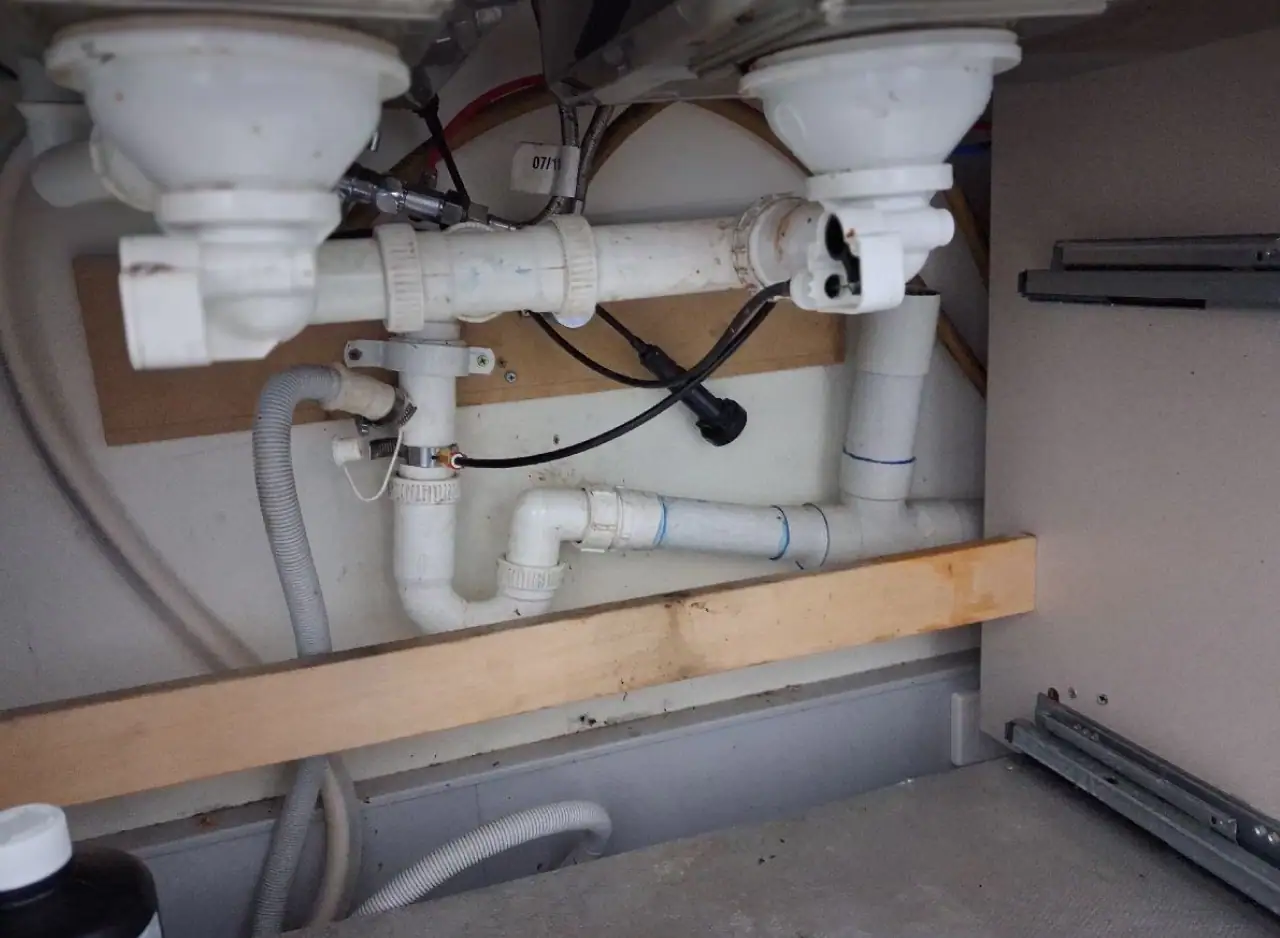
Drainage issues were reported affecting upper-level fixtures, with symptoms presenting as a blocked sink and restricted wastewater flow. Wastewater backed up through the inspection opening under the sink during use. The affected plumbing system required isolation to prevent further overflow while the blockage remained unresolved, impacting the normal operation of connected fixtures across the property.
Diagnosis & Technical Assessment
Initial attendance identified a blockage within the upper-level drainage system, presenting as a standard obstruction. Chemical treatment and manual plunging were applied, but did not restore flow, with wastewater continuing to back up through the inspection opening.
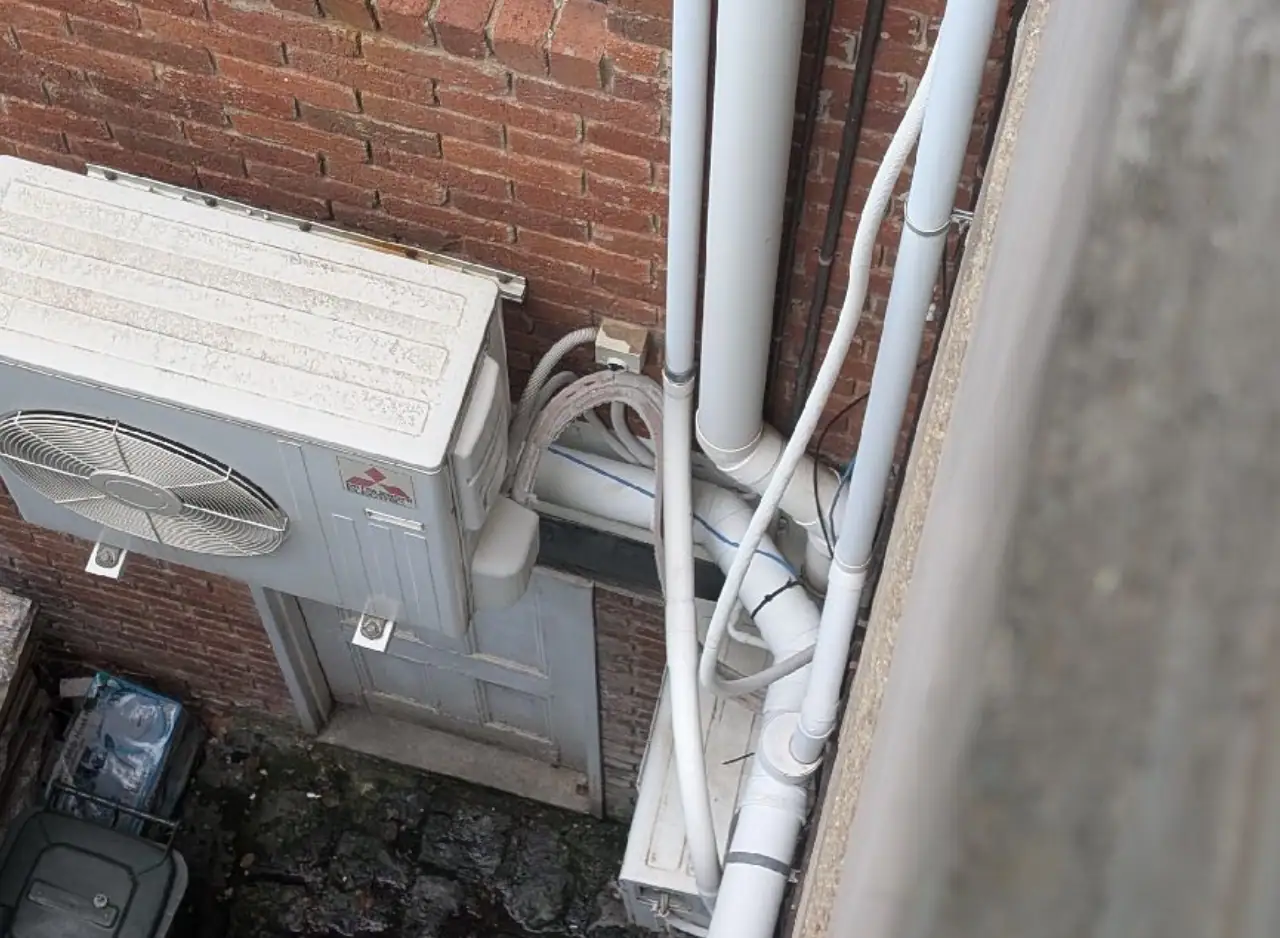
Further tracing identified the affected line as a 50mm PVC pipe extending approximately 30 metres through the building structure. Investigation confirmed that approximately 20 metres of this pipework was heavily restricted by solidified fat buildup adhered to the internal pipe walls.
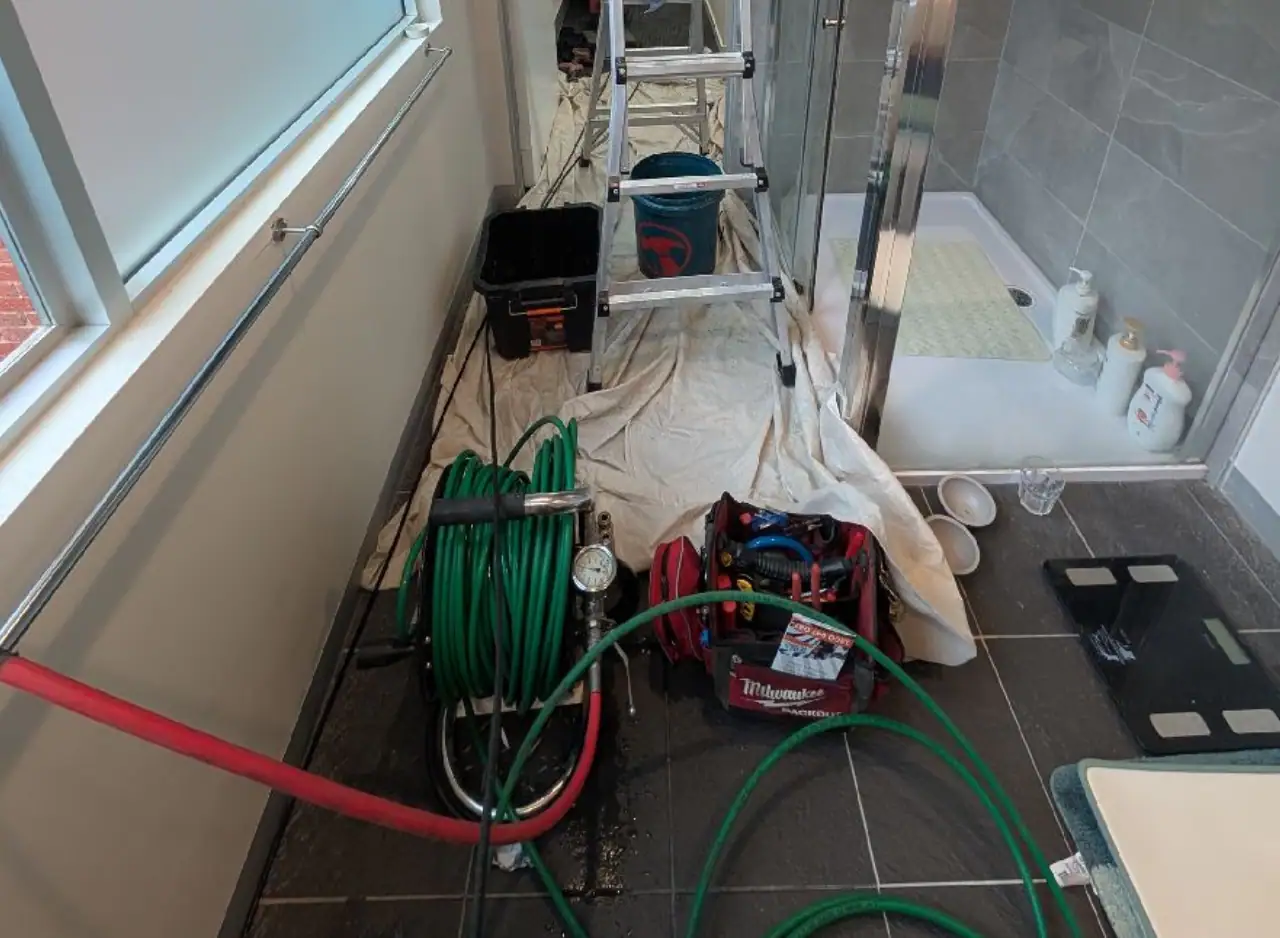
The pipe configuration included sections beneath the slab and across internal areas, limiting access through existing openings. A suitable access point was later identified within the downstairs bathroom, allowing installation of a new inspection opening.
Inspection from this access confirmed the extent of internal buildup, which was consistent along a significant portion of the pipe length and required mechanical removal due to density and adhesion to the pipe walls.
All work was completed in accordance with the Victorian Building Authority (VBA) regulatory framework.
Solutions delivered
Initial clearing attempts using chemical treatment and plunging were undertaken based on the presenting condition of a standard blockage. When these methods did not restore flow, the approach shifted to establishing direct access to the affected pipework.
A new inspection opening was installed approximately halfway along the 50mm drainage line to allow effective entry for cleaning equipment. High-pressure jetting was then performed upstream and downstream of this access point to break down and remove accumulated fat deposits.
Multiple jetting passes were completed over an extended duration to progressively clear the buildup. The pipe was also jetted from the upper-level kitchen connection to ensure full-length cleaning. Minor adjustments to the pipe clips were made to improve fall and drainage performance.
Tools, Parts & Systems Used
- High-pressure jetter
- Plunger
- 50mm PVC drain line
- Inspection opening
Outcome & Results
Drainage flow was restored across the affected system after internal buildup was removed. Multiple flow tests were conducted by running fixtures to confirm consistent discharge and the absence of obstruction. The pipework was cleared along its full length, and adjustments to pipe alignment supported improved flow performance. The system was returned to normal operation with no further blockage observed at completion.
All work was carried out in accordance with relevant Australian Standards and safety requirements.
Repair vs Replacement
Where blockages are caused by internal buildup rather than structural failure, cleaning methods are typically selected before pipe replacement. In this case, solidified fat accumulation restricted flow without compromising pipe integrity.
Establishing a new inspection point enabled direct access to cleaning equipment, avoiding the need to remove pipe sections. Mechanical cleaning using high-pressure jetting restored functionality across the system. Replacement is generally reserved for cases involving pipe damage, collapse, or recurring failure conditions.