
Burst Pipe Leak Repaired in Richmond
Completed Job Summary
A concealed water leak was repaired during a residential plumbing service in Richmond. Brickwork was opened to access the affected pipework; the leaking fitting was repaired, and the installation was pressure-tested following completion.
26 May 2026
 Jarryd
Plumber
81702
This job record is derived from first-party technician notes and the Simpro job management.
Customer report
The customer requested assistance for a burst pipe or leak at a residential property in Richmond. Customer-provided images accompanied the initial enquiry, and the service request included pressure checking and investigation of the leak. The affected pipework was concealed within a brick wall cavity, requiring access works before the source of the leak could be assessed and repaired.
Diagnosis & Technical Assessment
The plumbing service involved exposing brickwork to gain access to concealed water pipework where a leak had been identified. Following access to the cavity, the pipework and fittings were inspected to assess the condition of the installation and determine the source of the leak.
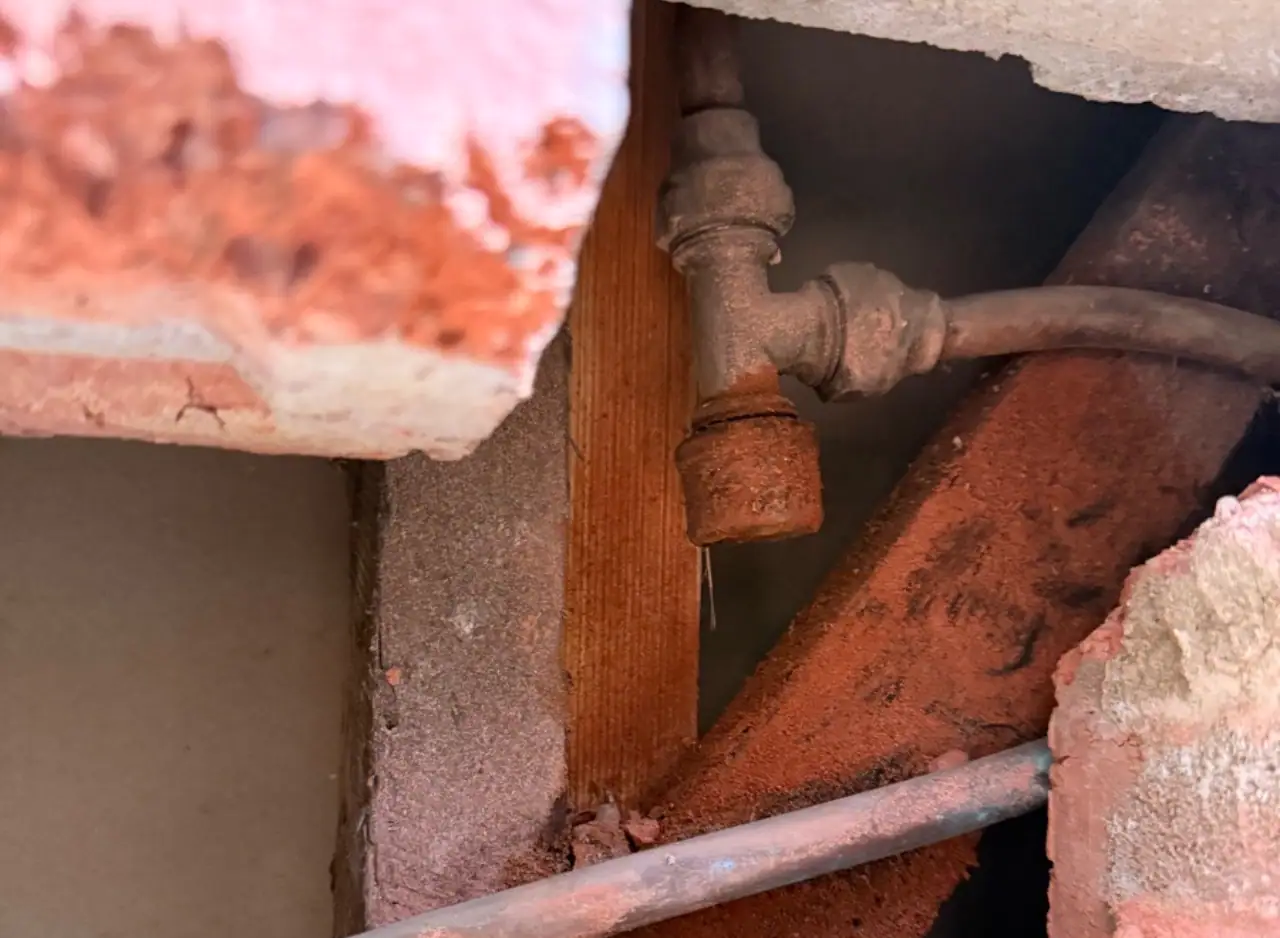
Assessment identified a leaking water tee fitting within the concealed pipework. During inspection of the exposed copper pipework, visible signs of corrosion, together with kinking and dents, were observed. The technician discussed the visible condition of the pipe with the customer, who elected to proceed with repairing the active leak.
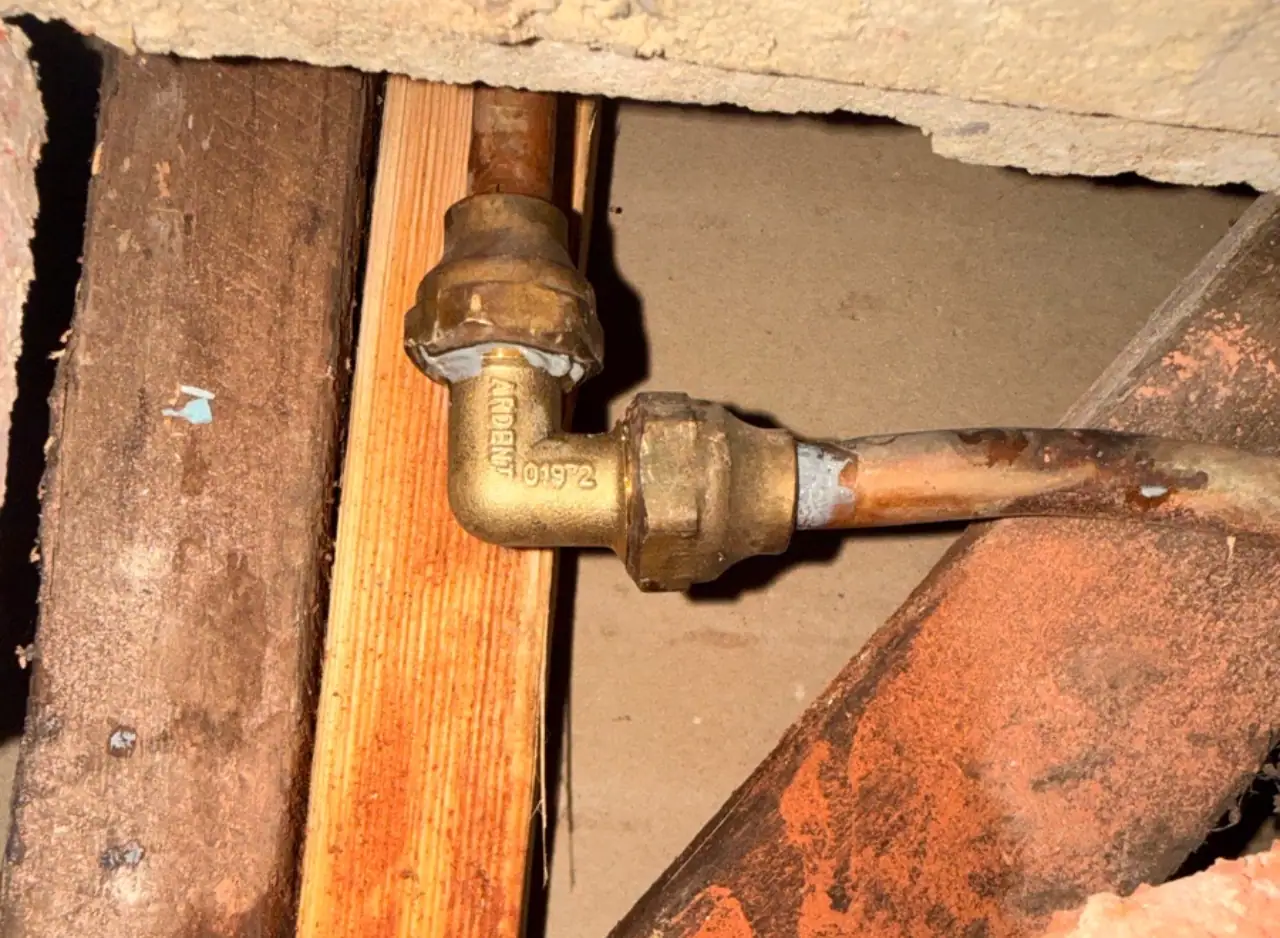
The defective fitting configuration was addressed by replacing the leaking section with an alternative connection arrangement using a compression elbow. Following completion of the repair, pressure testing was conducted to assess the installation’s integrity. Testing recorded a 50kPa pressure drop over a 10-minute period. The customer was advised to continue monitoring for any further indications of leakage following completion of the repair works.
All work was completed in accordance with the Victorian Building Authority (VBA) regulatory framework.

Solutions delivered
The completed solution focused on repairing the identified leak source within the concealed water supply pipework. Brickwork was opened to provide access to the affected section, allowing the leaking fitting to be isolated and repaired.
The technician inspected the exposed pipework and identified signs of corrosion, together with physical wear in the form of kinking and dents. After discussing the observed pipe condition with the customer, the decision was made to repair the leak rather than undertake additional pipe replacement.
A compression elbow was installed to replace the defective fitting arrangement and simplify the pipe configuration at the leak location. Once the repair was completed, the installation was pressure tested and checked to assess system performance following reinstatement of the water supply. The selected repair addressed the identified leak source while retaining the remaining accessible pipework.
Tools, Parts & Systems Used
- Compression elbow
- Copper water pipework
- Concealed water supply system
Outcome & Results
The concealed water leak was repaired, and the affected pipework was pressure tested following completion of the works. The technician confirmed completion of testing and inspection activities, with job completion records also confirming site clean-up and final checking of the installation.
The customer was advised to continue monitoring for any further indications of leakage following completion of the repair.
All work was carried out in accordance with relevant Australian Standards and safety requirements.
Repair vs Replacement
Concealed water leaks can often be addressed through targeted repair when the source of the leak can be isolated to a specific fitting or pipe section. Where the surrounding pipework remains serviceable, replacing the defective component may provide an effective solution without requiring broader pipe replacement works.
In this Richmond job, the leak source was associated with a defective tee fitting within concealed pipework. After inspection of the exposed copper pipework and discussion of its condition, the customer elected to proceed with repair of the active leak. Installation of a compression elbow addressed the identified leak source while retaining the remaining pipework configuration.