
Moisture Investigation Completed in Kew
Completed Job Summary
A residential leak investigation was completed at an apartment property in Kew following reports of moisture, mould growth, and peeling paint above a shower area. Inspection of accessible building areas, the apartment above, and the ceiling cavity identified no active plumbing leak; site findings indicated condensation as the likely source of the moisture.
18 May 2026
 Taylor
Senior Plumber
81663
This job record is derived from first-party technician notes and the Simpro job management.
Customer report
The property owner reported a suspected leak between apartments and provided access to the apartment above for the investigation. Moisture, mould growth, water droplets, and peeling paint had been observed on the ceiling above the lower-floor shower area. The concern centred on whether the moisture was being caused by a plumbing leak from another section of the building.
Diagnosis & Technical Assessment
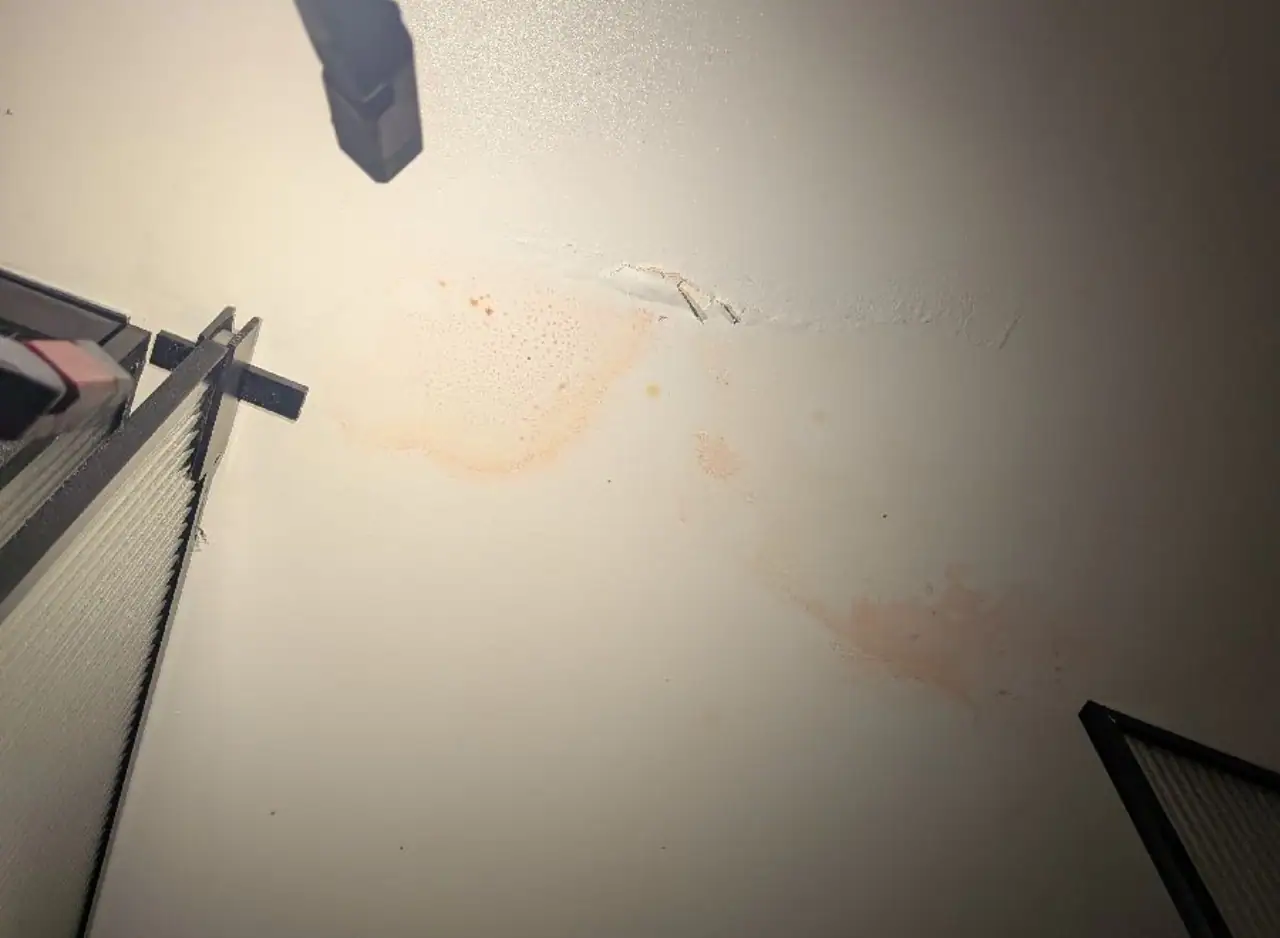
A fault-finding investigation was undertaken to determine the source of moisture affecting the ceiling above the lower-floor shower area. Initial assessment identified mould growth, water droplets, and paint deterioration on the affected plaster ceiling.
Inspection commenced through the available laundry manhole access; however, visibility to the affected section was limited due to the location and restricted access conditions. Accessible areas within the ceiling space appeared dry, with no visible evidence of active moisture or plumbing failure.
Further investigation was conducted in the apartment directly above the affected area. No bathrooms, wet areas, or major plumbing fixtures were positioned directly over the damaged ceiling section. Accessible areas inspected above also appeared dry and showed no obvious evidence of water leakage.
To obtain direct visibility, a section of the affected plaster ceiling was opened. Inspection of the ceiling cavity found the area to be dry, with no signs of water ingress, leaking pipework, or moisture accumulation. Assessment of the bathroom layout identified enclosed shower and toilet cubicles separated by full-height walls with limited airflow between spaces. The extraction fan located within the toilet cubicle was found to be non-operational. Based on the inspection findings, condensation was identified as the likely source of the moisture.
All work was completed in accordance with the Victorian Building Authority (VBA) regulatory framework.

Solutions delivered
The investigation focused on systematically eliminating potential plumbing-related causes before determining the likely source of the moisture issue.
Accessible ceiling areas were inspected through existing manhole access, followed by inspection of the apartment directly above the affected ceiling location. Because these inspections did not identify active leakage, additional investigation was undertaken by opening the plaster ceiling in the area where moisture staining and paint deterioration were visible.
Inspection of the exposed ceiling cavity confirmed that no active plumbing leak was present. The assessment process identified conditions consistent with condensation, including restricted airflow between bathroom compartments and a non-operational extraction fan.
Following completion of the investigation, findings were documented and recommendations provided regarding restoration of mechanical ventilation, consideration of additional extraction within the shower area, and maintaining airflow between bathroom spaces to assist with moisture management.
Tools, Parts & Systems Used
- Laundry manhole access
- Ceiling cavity
- Bathroom extraction fan system
- Plaster ceiling inspection opening
Outcome & Results
The investigation concluded without evidence of an active plumbing leak. Inspection of accessible ceiling spaces, the apartment above, and the opened ceiling cavity all confirmed dry conditions and no signs of leaking pipework.
Site observations indicated that condensation was the likely cause of the moisture affecting the ceiling surface above the shower area. The investigation provided a clear explanation for the reported symptoms and identified ventilation-related factors contributing to moisture accumulation within the bathroom environment.
All work was carried out in accordance with relevant Australian Standards and safety requirements.


Repair vs Replacement
When moisture staining appears near bathrooms, investigation is often required before any repair or replacement decisions can be made. Determining whether moisture is caused by an active plumbing leak, a building defect, or condensation requires assessing accessible pipework, surrounding areas, and the affected structure itself.
In this case, inspection findings ruled out active plumbing leakage and identified conditions consistent with condensation. Where ventilation systems are not operating effectively, restoring extraction performance may address the underlying cause. Investigation-first approaches help ensure that repairs are directed toward the actual source of moisture rather than replacing components unnecessarily.