
Corroded Basin Waste Pipe Replaced in Fitzroy North
Completed Job Summary
A blocked basin waste was investigated at a Fitzroy North property after the basin stopped draining. Initial clearing attempts were unsuccessful, with internal corrosion identified in the existing waste pipe. The affected pipework was then removed and replaced with new PVC waste pipe, basin fittings, and external access.
31 July 2026
 Taylor
Senior Plumber
82064
This job record is derived from first-party technician notes and the Simpro job management.
Customer report
The reported issue involved a blocked basin waste at a Fitzroy North property managed as an Airbnb. The basin was not draining when the plumbing assessment was carried out. The initial job details identified a blocked drain and included a pressure check, with the service attendance progressing into an investigation of the basin waste and the obstruction preventing drainage.
Diagnosis & Technical Assessment
The basin was confirmed not to be draining during the assessment. The basin trap was initially plunged to move the obstruction, but repeated plunges did not move the waste line beneath the basin.
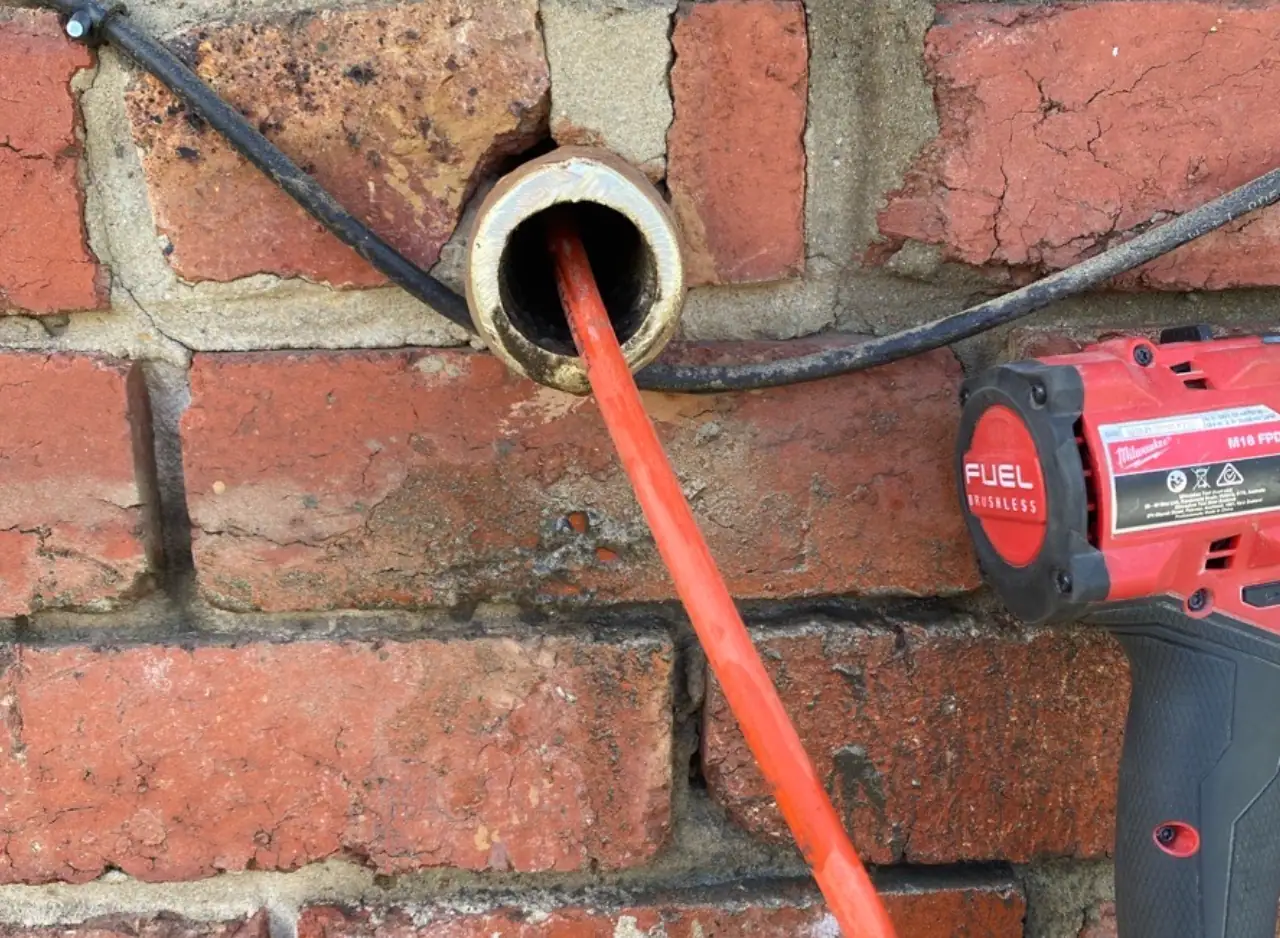
A chain flail was then fed into the drain to break up and dislodge material within the pipe. The chain flail had a recorded reach of up to six metres. Despite working the line with the chain flail, flow was not restored.
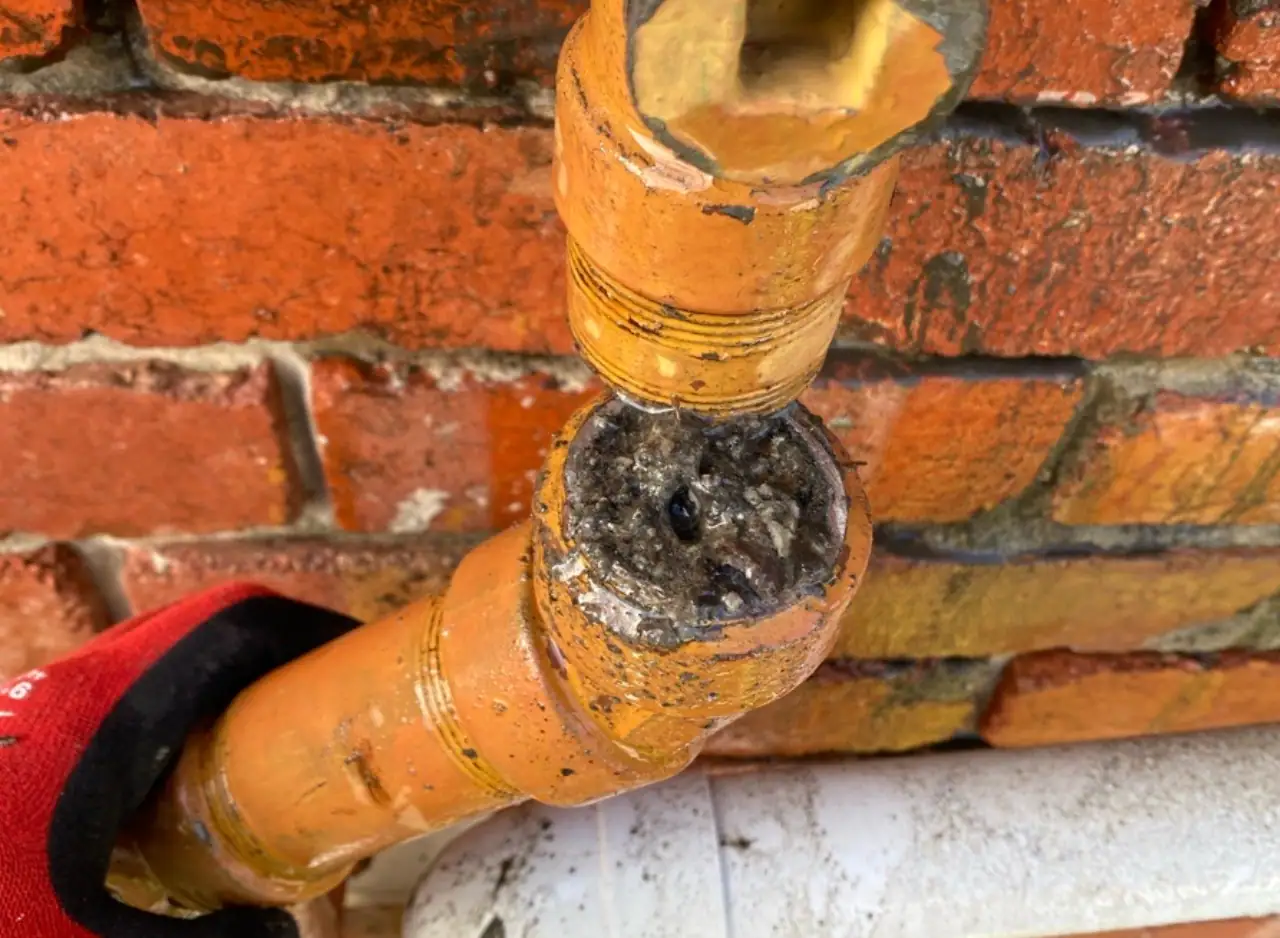
Assessment of the existing waste line identified internal corrosion within the cast iron pipe. The internal surface had become roughened, and the effective pipe diameter had reduced. This condition allowed debris to catch within the waste line rather than pass through normally.
Because plunging and chain-flail clearing did not restore flow, and the physical condition of the existing pipe was identified as the underlying cause of the blockage, further clearing was not considered a lasting solution. Replacement of the affected section of the waste pipework with PVC pipework was therefore selected.
All work was completed in accordance with the Victorian Building Authority (VBA) regulatory framework.

Solutions delivered
The rectification work involved removing affected sections of the existing basin waste system and installing replacement pipework and fittings.
The basin vanity waste was removed, and the existing copper pipe was cut back. A new chrome pop-up waste and basin trap was installed, with the new waste connected to the existing pipe using a 32–40 mm Plumquick.
Externally, the affected iron waste pipe was cut out. A new PVC waste pipe was installed up the outside wall to replace the affected section, and an access point was incorporated into the external waste pipework.
The replacement approach followed the earlier clearing attempts with the plunger and chain flail. As these methods did not restore flow and internal corrosion had narrowed and roughened the existing waste pipe, the affected section was replaced rather than continuing with clearing attempts.
Tools, Parts & Systems Used
- Plunger
- Chain flail
- PVC waste pipe
- Chrome pop-up waste
- Basin trap
- 32–40 mm Plumquick
- External waste access
Outcome & Results
The recorded replacement work was completed. The affected external iron waste pipe was removed and replaced with PVC pipework, while the basin was fitted with a new chrome pop-up waste and trap connected to the existing waste system. An access point was also installed in the external pipework. The completed work addressed the deteriorated section identified during the blockage investigation.
All work was carried out in accordance with relevant Australian Standards and safety requirements.


Repair vs Replacement
Blocked waste pipes can sometimes be cleared where the obstruction is contained within pipework that remains in serviceable condition. In this Fitzroy North job, plunging and chain-flail cleaning were attempted first, but did not restore flow. Assessment identified corrosion that had roughened the internal surface and reduced the effective diameter of the existing waste pipe. Given the pipe’s condition, which contributed to debris becoming caught, the affected section was removed and replaced with PVC pipework rather than relying on further clearing attempts.