
Leaking Toilet and Basin Repaired in East Melbourne
Completed Job Summary
A leaking toilet cistern and basin mixer were addressed during plumbing work at an apartment in East Melbourne. The toilet inlet and outlet valves, basin mixer, flexi hoses, and isolation components were replaced, and the completed toilet inlet connection was confirmed to hold without leaking.
3 July 2026
 Jarryd
Plumber
81903
This job record is derived from first-party technician notes and the Simpro job management.
Customer report
The reported plumbing issue involved a toilet cistern leaking into the bowl at an East Melbourne apartment managed by Airsolved. During the job, additional issues were identified at the basin, including a badly leaking mixer, rusted flexi hoses and the absence of isolation valves. The toilet cistern was also in poor condition, with leakage associated with the outlet valve.
Diagnosis & Technical Assessment
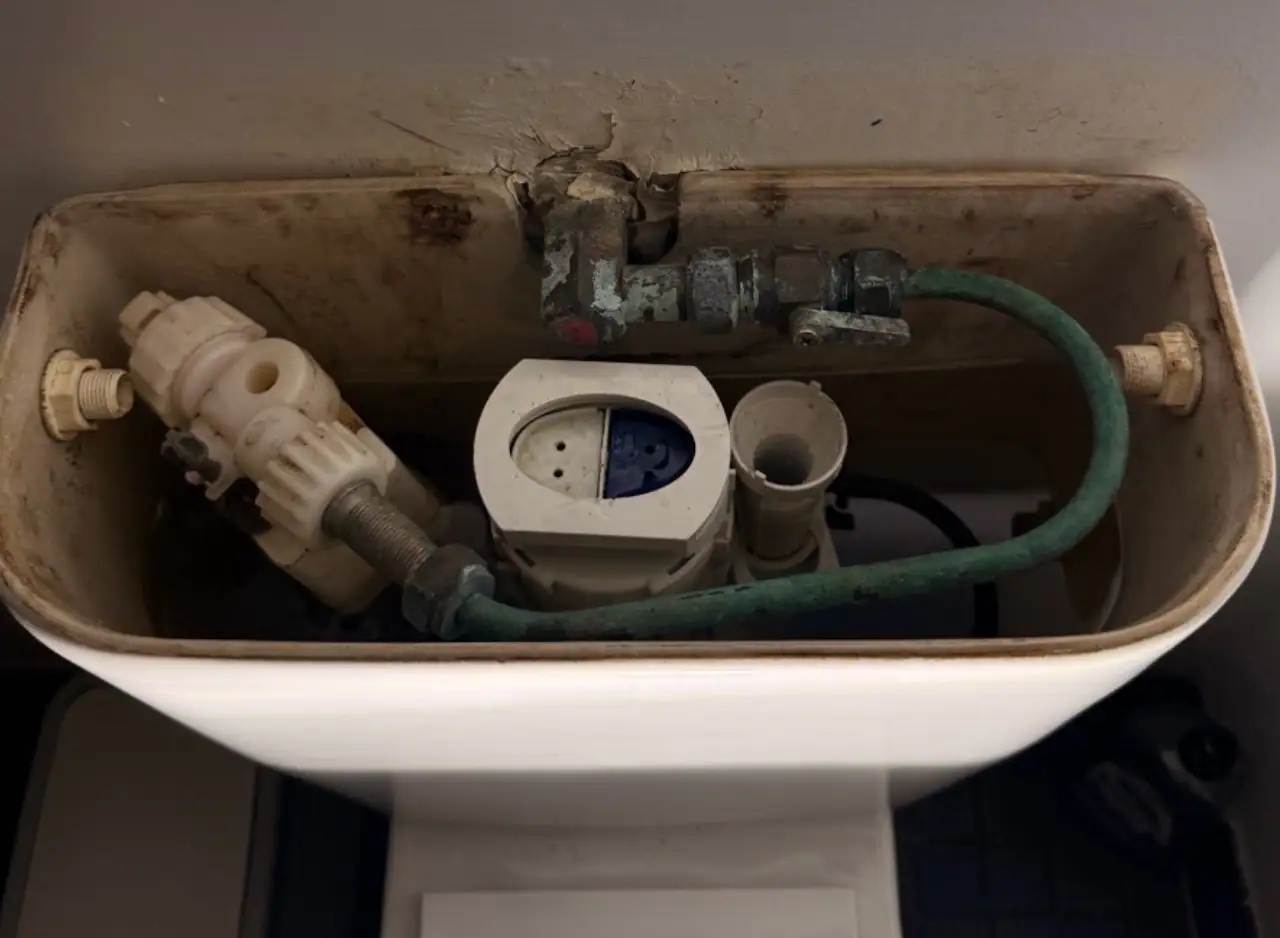
Inspection of the bathroom plumbing identified faults affecting both the toilet and basin. The toilet was leaking into the bowl, with the outlet valve identified as the source of the leak. The cistern was also assessed as being in poor condition.
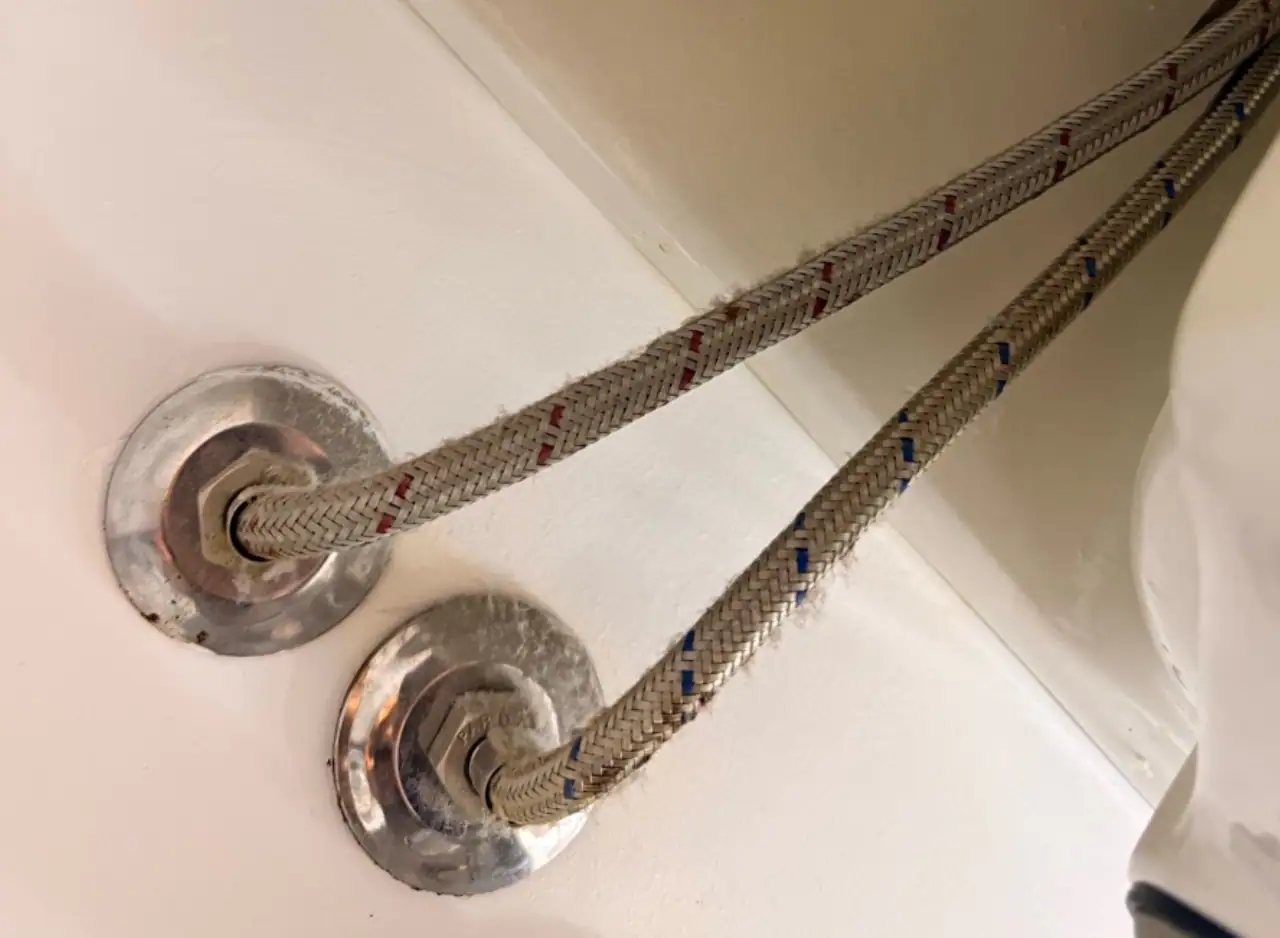
At the basin, the mixer was leaking badly, and the connected flexi hoses were rusted. Isolation valves were absent from the existing basin water connections. These conditions meant the completed scope needed to address both the leaking fixtures and the associated water connections.
Replacing the entire toilet was considered during the assessment. The existing water inlet position made a full toilet replacement difficult, so the completed work focused instead on replacing the affected components within the existing installation.
During the installation of the new toilet inlet valve, the available space was tight. Copper was used to support the inlet valve, and Teflon tape was applied around the copper olive to seal the plastic side of the connection. The installed inlet-valve connection was subsequently confirmed as holding and not leaking.
All work was completed in accordance with the Victorian Building Authority (VBA) regulatory framework.
Solutions delivered
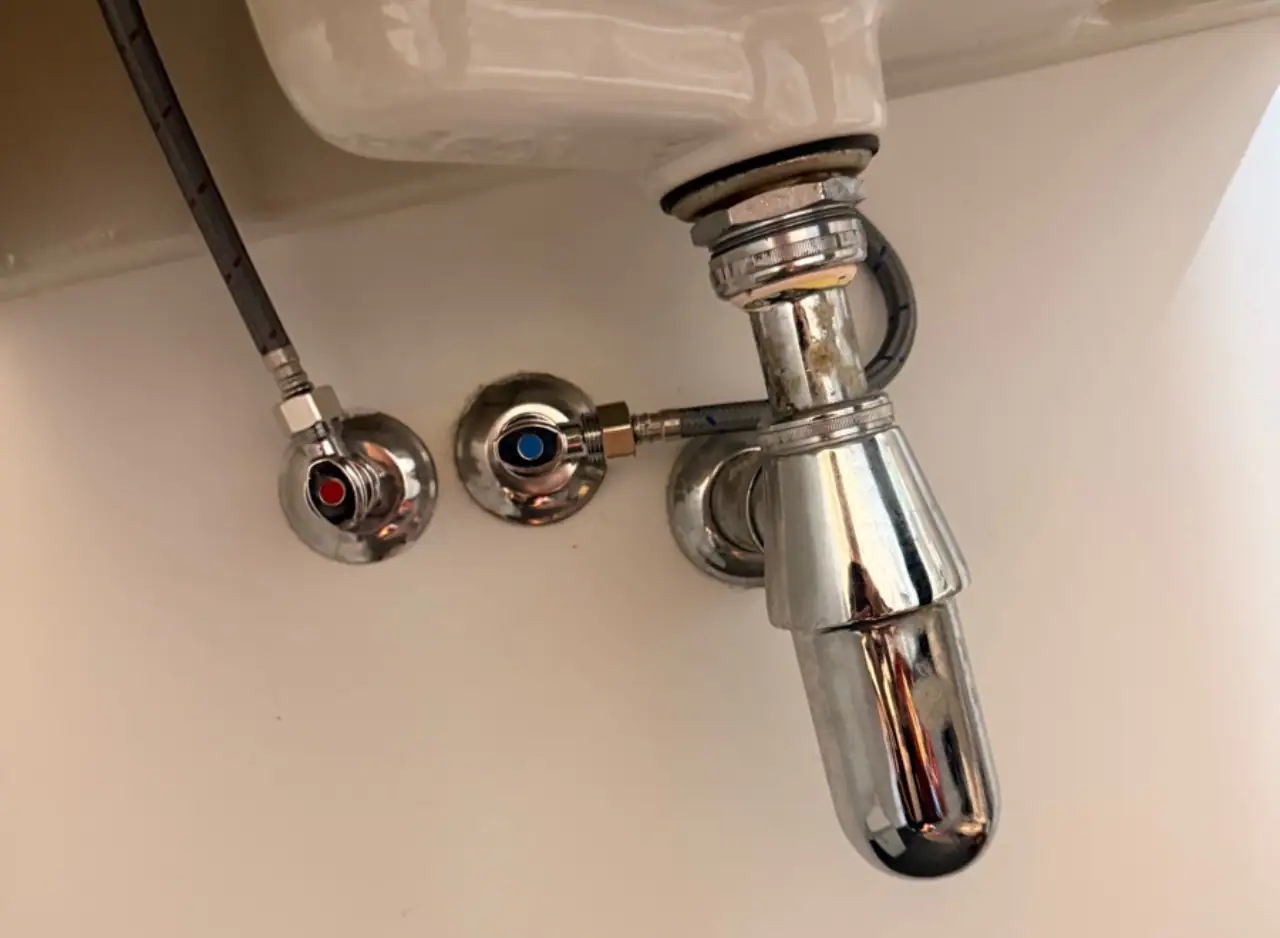
The completed work addressed the identified faults without replacing the complete toilet. A new toilet inlet valve and outlet valve were installed, together with a new mini stop and water connection point. The outlet valve replacement addressed the component associated with the toilet leak.
At the basin, the leaking mixer was replaced along with the rusted flexi hoses. New mini stops were also installed, adding isolation points to the basin water supply connections.
The toilet inlet valve installation required an adaptation due to the restricted fit. Copper was used to support the valve, with Teflon tape applied around the copper olive at the plastic side of the connection.
This component-based approach retained the existing toilet while addressing the affected inlet and outlet components. It also avoided the difficulty of a complete toilet replacement due to the existing water inlet position.
Tools, Parts & Systems Used
- Toilet inlet valve
- Gerberit Impulse 250 outlet valve
- Basin mixer and flexi hoses
- Mini stops
- Copper and Teflon tape
Outcome & Results
The toilet inlet and outlet components, basin mixer, flexi hoses and isolation components were replaced as part of the completed plumbing work. Following installation of the toilet inlet valve, the connection was checked and confirmed as holding without leaking.
The completed scope retained the existing toilet, replaced the affected components, and addressed the basin mixer, deteriorated flexi hoses, and water supply isolation points identified during the job.
All work was carried out in accordance with relevant Australian Standards and safety requirements.

Repair vs Replacement
Component replacement may be appropriate when a plumbing fault can be addressed without replacing the entire fixture. The condition of the existing fixture, the failed components, and the configuration of the water connections influence the completed approach.
For this East Melbourne job, a complete toilet replacement was considered difficult because of the existing water inlet position. The completed solution therefore, retained the toilet while replacing its inlet and outlet valves. At the basin, the leaking mixer, rusted flexi hoses and associated isolation components were replaced to address the identified conditions.