
Tree Roots Identified in Blocked Drain in Elwood
Completed Job Summary
A completely blocked toilet was investigated at an Elwood property after the water stopped draining. Following an unsuccessful plunging attempt, the drain was accessed through an inspection opening, and high-pressure water jetting and CCTV inspection identified tree roots penetrating the cast-iron drain at a 90-degree bend, approximately 1.2 metres deep.
14 July 2026
 Reece
Reece
Plumber
81978
This job record is derived from first-party technician notes and the Simpro job management.
Customer report
The customer reported that the toilet had suddenly become completely blocked, with water no longer draining away. The toilet blockage was the primary symptom requiring investigation, with the service attendance progressing from an initial attempt to clear the fixture to investigation of the connected drainage pipework.
Diagnosis & Technical Assessment
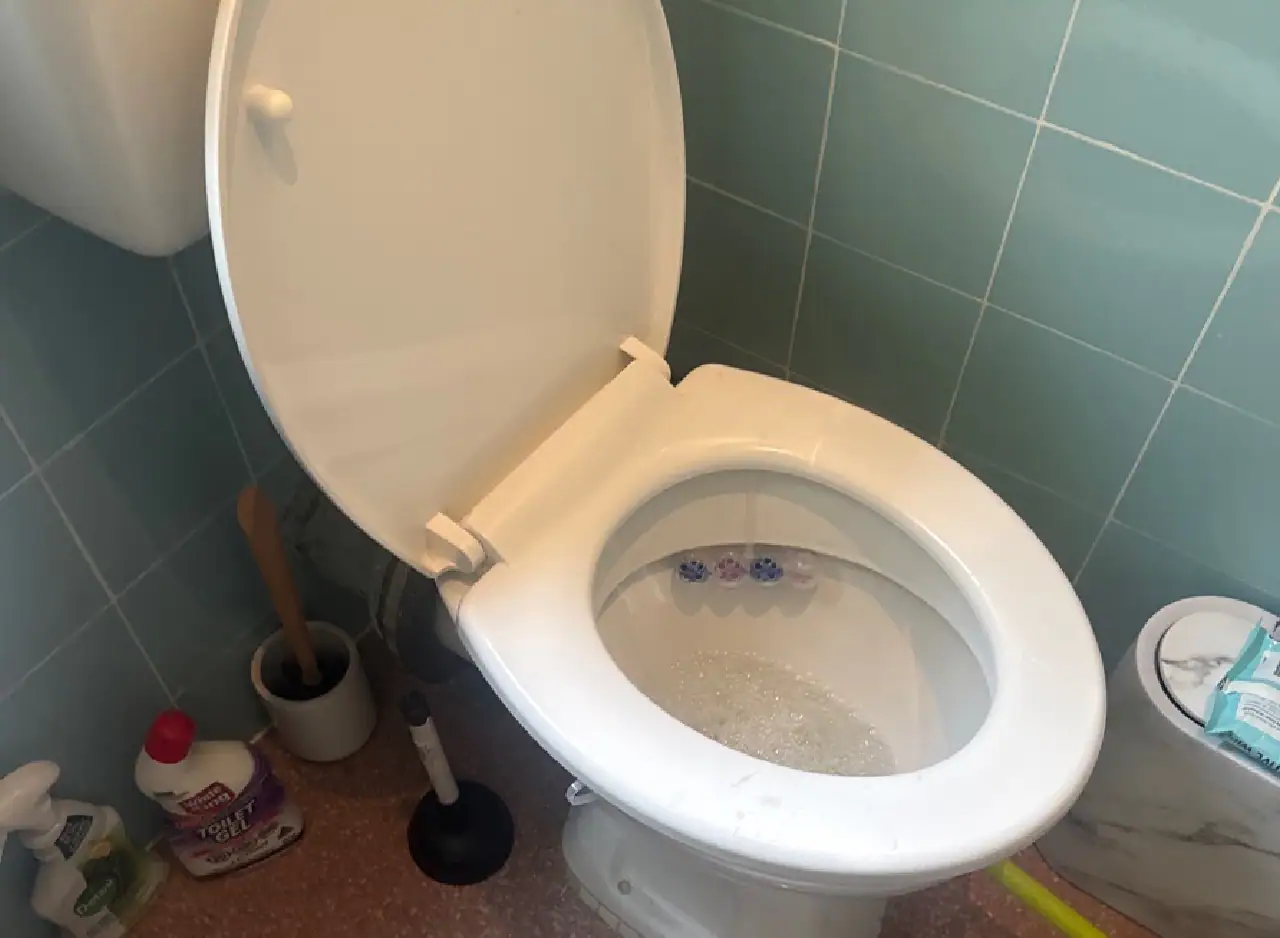
The toilet was initially plunged to determine whether the blockage could be moved through the drainage system. This attempt was unsuccessful, with no flow observed.
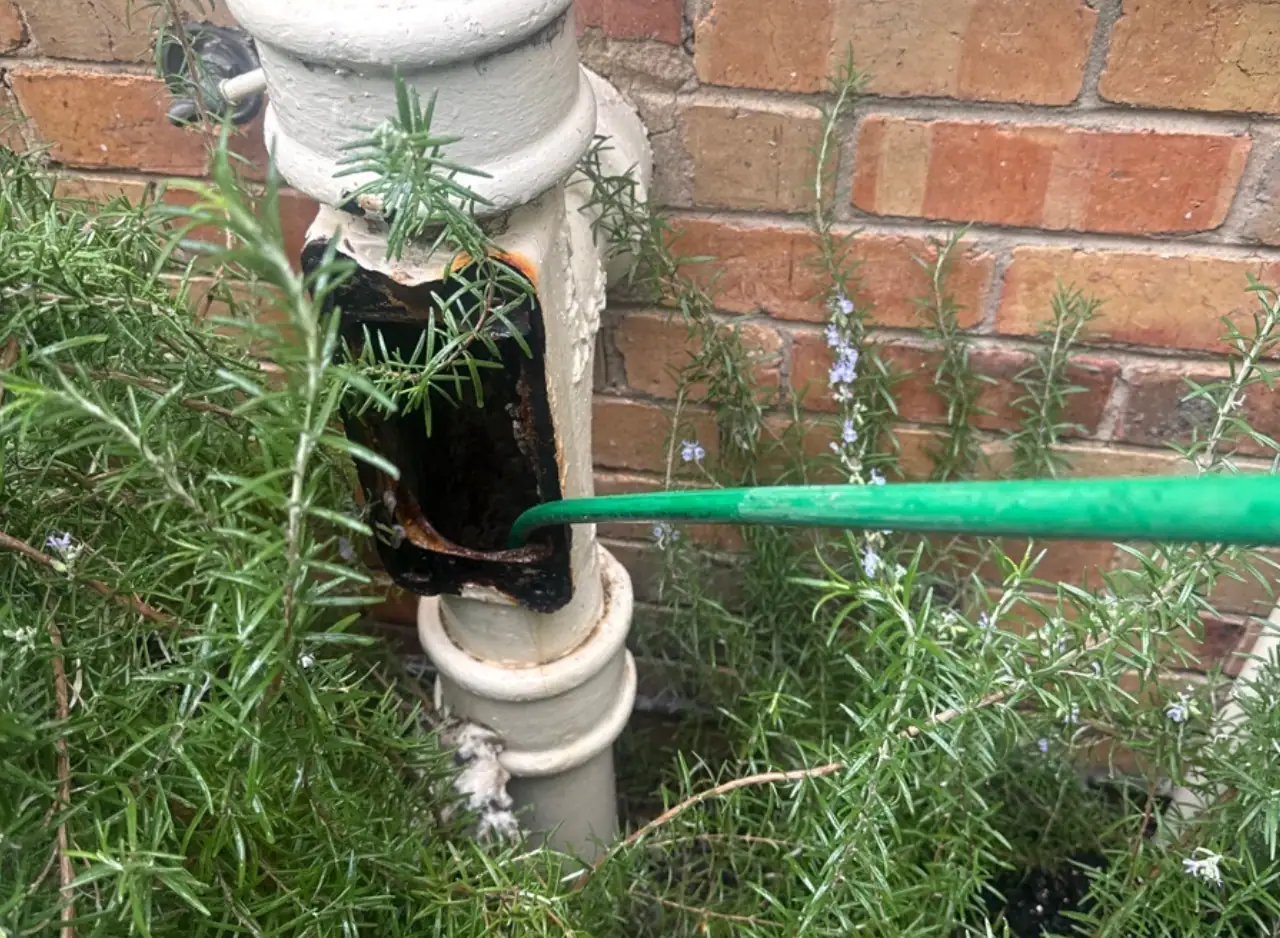
Following the failed plunging attempt, the inspection opening for the cast-iron drain was opened. High-pressure water jetting and CCTV drain inspection were then used to investigate and work through the blockage. The technician accessed the drain through the 100 mm cast-iron pipe and used the camera in the line while jetting was underway.
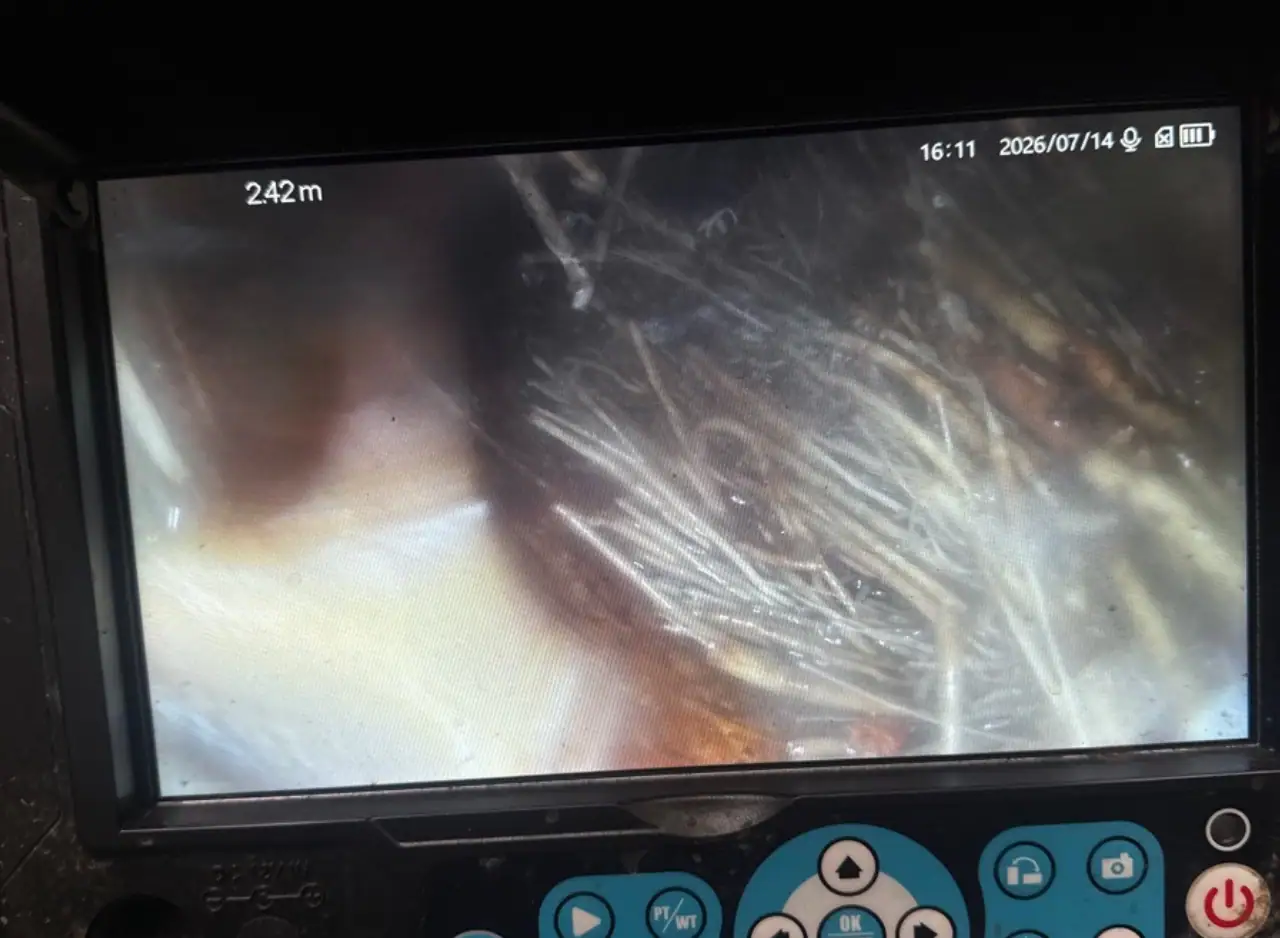
The CCTV inspection identified tree roots penetrating through the existing cast-iron drain. The root intrusion was located at a 90-degree bend approximately 1.2 metres deep.
High-pressure water jetting continued for approximately 45–50 minutes, with the drain camera used during the process to identify the location and condition associated with the blockage. The inspection established that tree-root penetration of the cast-iron drainage pipe was the cause of the blocked toilet.
All work was completed in accordance with the Victorian Building Authority (VBA) regulatory framework.
Solutions delivered
The initial response involved plunging the toilet to clear the obstruction. With no flow established by this method, the work progressed to high-pressure water jetting and CCTV inspection of the connected cast-iron drain.
The inspection opening was opened to provide access to the drainage line. A high-pressure water jetter was then used in conjunction with the drain camera for approximately 45–50 minutes. The camera remained in the drain during the jetting process to locate the affected section and identify the cause of the blockage.
This process identified tree roots penetrating the cast-iron drain at a 90-degree bend, approximately 1.2 metres deep.
Following the identification of the root intrusion, future excavation and repair of the affected cast-iron pipe with PVC were quoted. These repair works were identified as future works and were separate from the jetting and CCTV investigation completed during this attendance.
Tools, Parts & Systems Used
- Plunger
- High-pressure water jetter
- CCTV/drain camera
- 100 mm cast iron drain
- Inspection opening
Outcome & Results
High-pressure water jetting and CCTV drain inspection were completed during the Elwood attendance. The drain was jetted for approximately 45–50 minutes while the camera was used to inspect the affected pipework. This established that tree roots were penetrating the cast-iron drain at a 90-degree bend, approximately 1.2 metres deep. Future excavation and replacement of the affected cast iron section with PVC were subsequently quoted.
All work was carried out in accordance with relevant Australian Standards and safety requirements.
Repair vs Replacement
Drain blockages caused by material within otherwise serviceable pipework may be addressed using clearing methods such as plunging or high-pressure water jetting. Where CCTV inspection identifies a physical defect or intrusion affecting the pipe itself, additional repair work may be required.
In this Elwood job, plunging did not establish flow, so high-pressure jetting and CCTV inspection were used to investigate the drainage line. The camera identified tree roots penetrating the existing cast iron pipe. Based on that finding, excavation and replacement of the affected cast-iron section with PVC were identified as future repair works.